
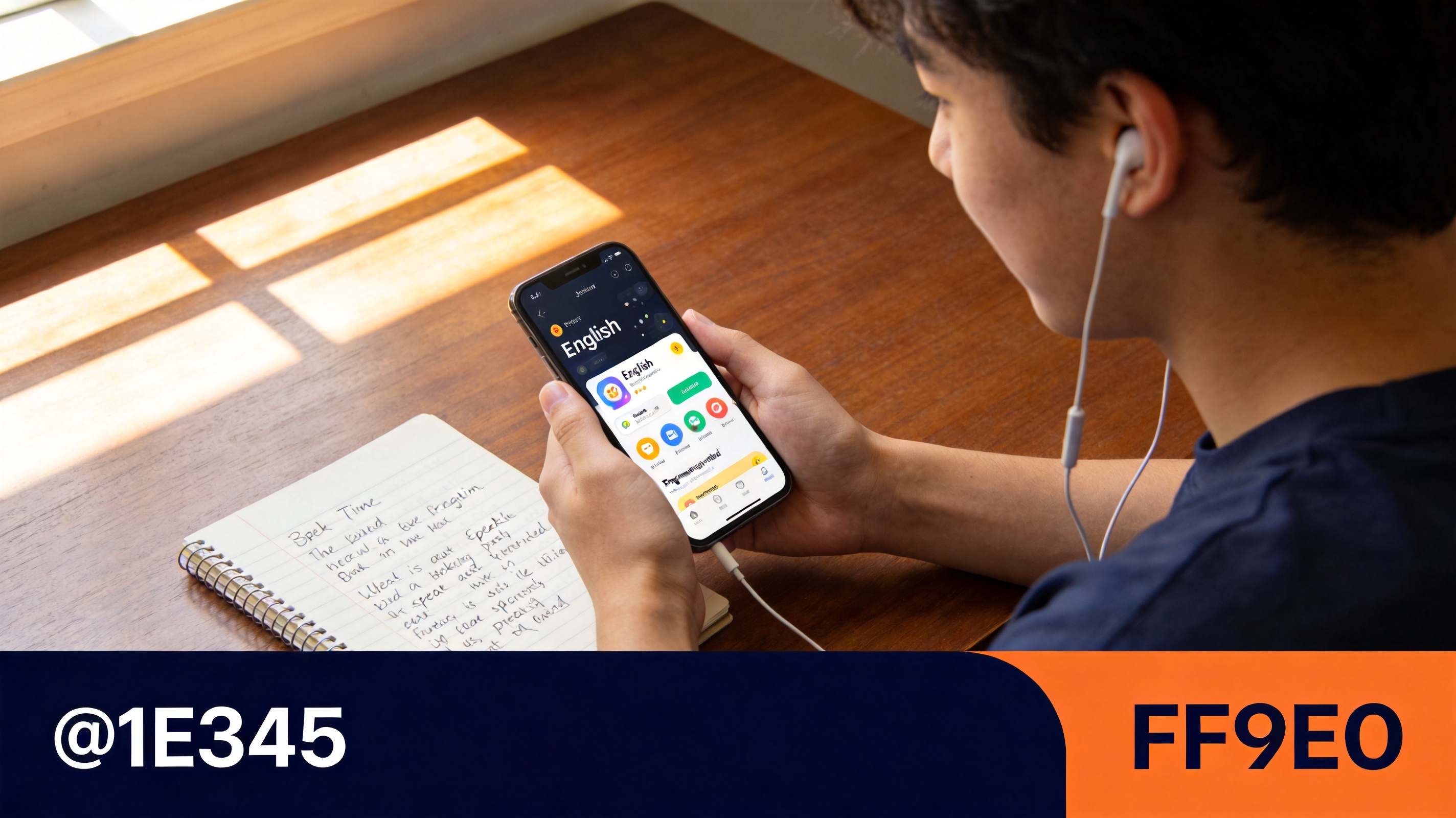
The biggest difference between learning English in China and abroad is that you never get the chance to wait until you have 3 full hours to speak. You have to open your mouth to order coffee or catch a bus. A lot of people buy into the myth that "your English will automatically get good once you go abroad", which is total nonsense. When I first arrived in the US, there were tons of Chinese students sticking to Chinese communities, and after 3 years they still only knew how to say "this one" when ordering food. Recently, many fans have asked me how to practice spoken English, especially 9-to-5 working professionals who can't squeeze out long chunks of time for classes.
Not long ago, we pulled learning data from 12,000 active students at FastCool English, and found that students who take 5 25-minute high-frequency short lessons per week during fragmented time improve their spoken English 2.7 times faster than those who take long classes only on weekends, and their course renewal rate is 42% higher.
01The Core Logic Behind Fragmented Time Spoken English Learning
Many people have a misunderstanding about fragmented time: they think it can only be used to memorize words or listen to audio, not practice speaking, since you can't speak English loudly on the subway, right? That's completely missing the point of spoken English learning.
Our teaching director Luna says: "The core of spoken English practice is not how much new knowledge you learn, but how many times you open your mouth to speak. Even if you only have 5 minutes, saying 10 full sentences is more useful than sitting for 2 hours just listening."
Frankly, I used to think I needed at least 1 hour of quiet time to practice spoken English. After I returned to China and was swamped with work, I tried booking a session with a Filipino teacher for 10 minutes during my lunch break to chat, and I remembered the content far better than when I forced myself to study for 2 hours on weekends. Spoken English is muscle memory, after all: frequent short stimulus works far better than long, low-effort input. As you can see from our previously tracked student cases, many working professionals improved drastically by using fragmented time wisely.
02How to Practice Spoken English: 3 Ready-to-use Fragmented Time Scenarios
You don't need to adjust your schedule specially, or force yourself to wake up early. Just pick up the time you usually waste every day:
- 15 minutes on commute: Open FastCool's preview materials, read 3 common sentences related to the topic you want to discuss that day 3 times. For example, if you're going to talk about work reports, memorize phrases like "Could you elaborate on that?" You don't need to memorize it perfectly, just have a rough impression
- 10 minutes of lunch break free time: Book a 25-minute high-frequency short lesson, just chat with the teacher about what you ate for lunch, what series you're following lately. You don't need to prepare complex content, and the effect of one-on-one spoken lessons is actually the best when you're relaxed. Our Filipino teachers are all based in our physical campus in Manila, so you can almost always find a suitable teacher even if you book last minute
- 5 minutes on the couch after work: Record yourself talking about the 3 most interesting things that happened to you today. Look up any words you get stuck on immediately, and ask your teacher for the standard expression in your next class
For example, Acheng, who works in internet operations, used to take 2-hour weekend classes for half a year, but still dared not join weekly meetings with foreign clients. After switching to 25-minute classes every day during lunch break, she was able to answer impromptu questions from clients freely after 2 months.
03Avoid These 2 Common Mistakes When Practicing Speaking in Fragmented Time
The first mistake is trying to cram everything in: memorize words, practice listening, practice speaking all in 10 minutes, and end up getting nothing done. To put it simply, when practicing speaking in fragmented time, focus on one core thing: open your mouth and speak. Leave everything else for longer study sessions.
The second mistake is chasing perfection: you spend half the time looking up words in the dictionary before you speak, and the time is gone before you even start. It's okay to make mistakes, your teacher will correct you. If you never speak, you'll never get it right. I personally prefer short lessons using the Callan Method, the question-based interaction gives you no time to zone out, and the 25 minutes are completely high-density speaking practice, far more efficient than practicing blindly on your own.
Actually, how to practice spoken English isn't that complicated. You don't need to squeeze extra time to study late at night. Just use the 10 or 20 minutes of scattered time you have every day, and you'll see changes after 2 months of persistence. If you're interested, you can book a free trial lesson to experience the rhythm of high-frequency short lessons first.